Metro launches “Fares Pay for Service” campaign to support safe, frequent, reliable transit service across the region
Updated: 9/4/2026
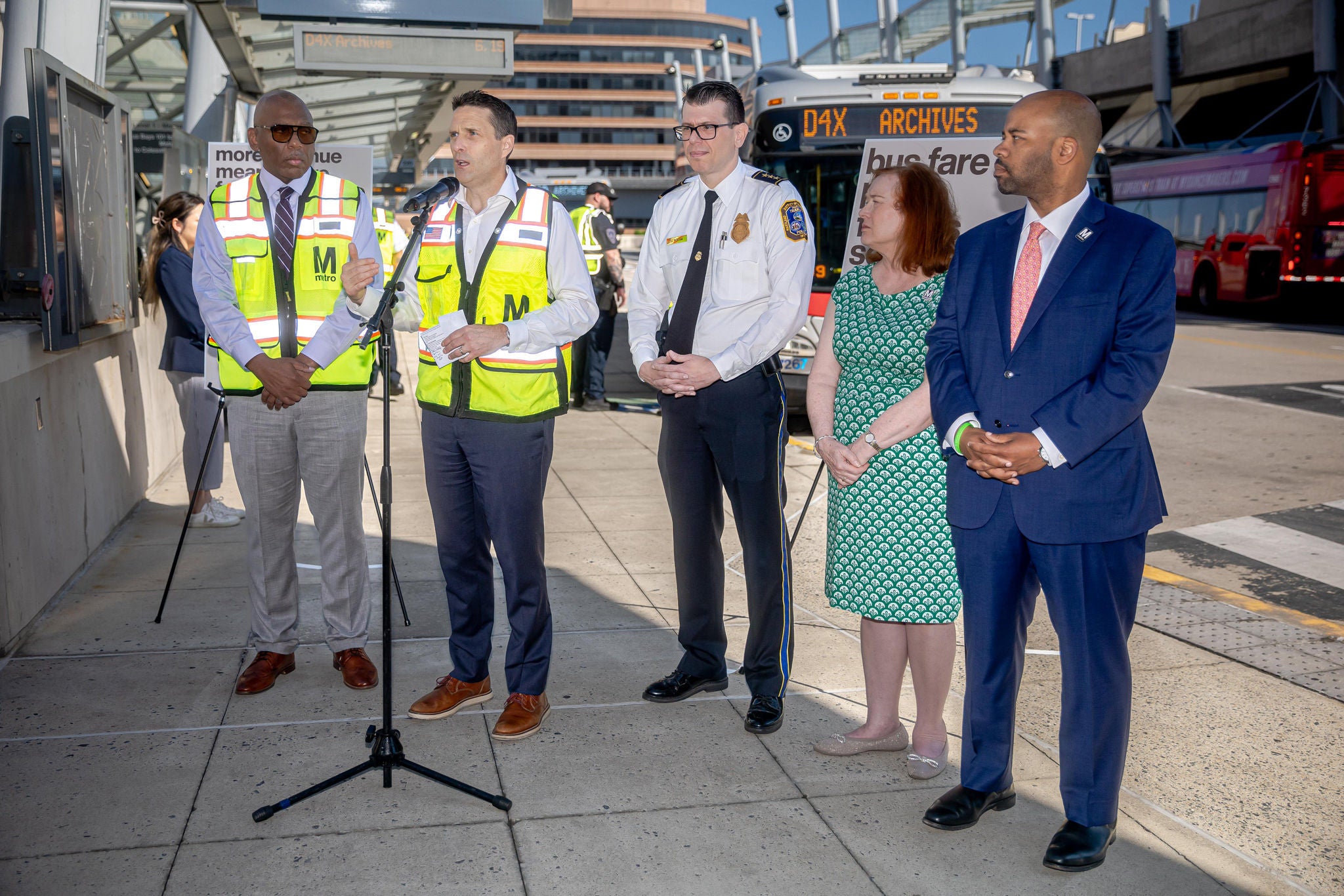
Campaign combines customer education, easier payment options, and expanded fare enforcement on Metro Bus
Metro’s “Fares Pay for Service” campaign is now in effect, a systemwide initiative focused on improving fare compliance and protecting funding for the transportation service customers depend on every day.
The campaign was highlighted during a media event on Thursday, May 28 at the Paul S. Sarbanes Transit Center in Silver Spring, where Metro General Manager and CEO Randy Clarke joined Metro Transit Police officers, Metro management team, Board members and staff to expand fare enforcement and customer education efforts on Metro Bus routes throughout the region.
“Customer fares pay for bus operators, vehicle maintenance, better service, and long-term investments across the region. Fare compliance matters, fare payment is expected, and our MTPD officers will enforce our policy,” said Metro General Manager and CEO Randy Clarke. “We must restore respect for the system, support our frontline workers and fund the services our customers need.”
Metro currently delivers nearly one million customer trips every day and continues to be a national leader in ridership growth. Investments in technology, reliability, customer experience, and easier fare payment through Tap. Ride. Go. have helped grow ridership. However, fare evasion on Metro Bus remains at unacceptable levels. Fare evasion on Metro Bus could result in approximately $50 million in lost revenue this fiscal year.
MTPD officers are responsible for fare enforcement and are using on-board real-time videos, as a force multiplier to address fare evasion and real-time safety issues while helping keep buses moving. These efforts support our officers by providing more digital resources that make enforcement more effective and efficient.
The “Fares Pay for Service” campaign combines customer outreach, expanded education and enforcement efforts on Metro Bus which include Bus Operators greeting customers and informing everyone that fares are $2.25.
As part of the campaign, Metro is highlighting payment through Tap. Ride. Go., which allows customers to pay fares more quickly and conveniently with a credit or debit card. Reduced fares also remain available for SNAP-eligible customers, seniors, students, and customers with disabilities.
Metro also enlisted regional leaders to help by joining the campaign on social media, in newsletters, at community meetings, and with constituents that Metro is a shared public asset and that it is not free to operate. Those who refuse to pay may be subject to a citation and removal from the bus.
The campaign builds on successful fare enforcement efforts on Metro Rail, where stronger fare gates and increased enforcement have reduced rail fare evasion by more than 80%. Those efforts have also supported broader public safety goals, including identifying outstanding warrants and recovering illegal weapons.
About Metro
The Washington Metropolitan Area Transit Authority (WMATA), known as Metro, is the region’s leading public transportation provider, serving a population of approximately four million people across Washington, D.C., Maryland, and Virginia within a 2,054-square-mile jurisdiction. With a network of six rail lines, 98 stations, 126 bus routes, and a door-to-door paratransit service, Metro is the second busiest transit system in the United States serving 268.9 million trips in 2025 with a $5 billion operating and capital budget. Since 2022, Metro has completed multiple transit-oriented development projects that have brought $15 million in tax revenue to the region from housing, office, and retail space in our community. Safety and security are core values at Metro. Over 30,000 cameras monitor the system, and Metro currently has the lowest crime rate in history with fare evasion down 82% on rail. In 2025, the American Public Transportation Association (APTA) named Metro the Transit Agency of the Year in recognition of industry-leading ridership growth, record high customer satisfaction, a newly redesigned Bus network, expanded rail service, and improved customer experience.
Sign up for Metro News releases