Real-time bus arrival information transitioning from BusETA to Rider Tools in January
Updated: 11/18/2026
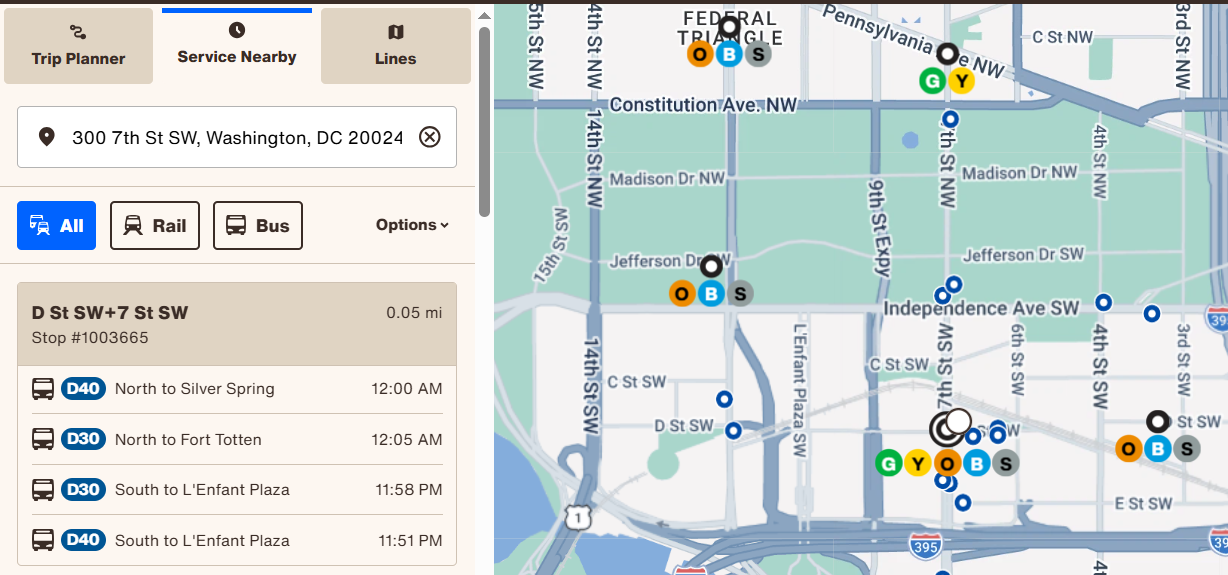
Metro will retire its legacy busETA website on Jan. 3, 2027, as part of an ongoing effort to modernize the digital tools customers use to plan and manage their trips. busETA launched in 2016 and relies on legacy technology that is no longer supported. Transitioning customers to Metro’s newer platforms will reduce technology risk and allow future digital improvements to be focused on tools that integrate bus and rail information and are designed to work across current devices.
Customers will continue to have access to schedules, real-time bus arrivals, service alerts, route and stop information, and other trip planning tools through Rider Tools on wmata.com and the Metro Pulse mobile app.
Rider Tools is the recommended option for customers who prefer to use a website. Available on desktop and mobile browsers, it brings bus and rail information together in one place, including nearby service, routes and lines, trip planning, real-time arrivals, service information, maps, and stop details. Metro Pulse provides a mobile app experience designed for customers on the go.
Beginning Jan. 3, major busETA web addresses, bookmarks, and search results will redirect customers to the most relevant Rider Tools page.
“This transition is about giving customers a better experience,” said Kristie Swink Benson, Metro Executive Vice President and Chief Communications and Customer Experience Officer. “Whether they use Rider Tools on the web or Metro Pulse on their mobile device, customers will have access to real-time bus information alongside trip planning, service alerts, and rail information in one convenient place. These modern tools make it easier to get the information you need before and during your trip.”
Customers may visit https://www.wmata.com/initiatives/buseta.html to learn more about the retirement of busETA and how to access Rider Tools.
About Metro
The Washington Metropolitan Area Transit Authority (WMATA), known as Metro, is the region’s leading public transportation provider, serving a population of approximately four million people across Washington, D.C., Maryland, and Virginia within a 2,054-square-mile jurisdiction. With a network of six rail lines, 98 stations, 126 bus routes, and a door-to-door paratransit service, Metro is the second busiest transit system in the United States serving 268.9 million trips in 2025 with a $5 billion operating and capital budget. Since 2022, Metro has completed multiple transit-oriented development projects that have brought $15 million in tax revenue to the region from housing, office, and retail space in our community. Safety and security are core values at Metro. Over 30,000 cameras monitor the system, and Metro currently has the lowest crime rate in history with fare evasion on rail and bus declining. In 2025, the American Public Transportation Association (APTA) named Metro the Transit Agency of the Year in recognition of industry-leading ridership growth, record high customer satisfaction, a newly redesigned Bus network, expanded rail service, and improved customer experience.
Sign up for Metro News releases